

NEW GOLTC Methods guide: Regression Discontinuity Design (RDD)
NEW GOLTC Methods guide: Regression Discontinuity Design (RDD)
Published:
12 Mar 2026
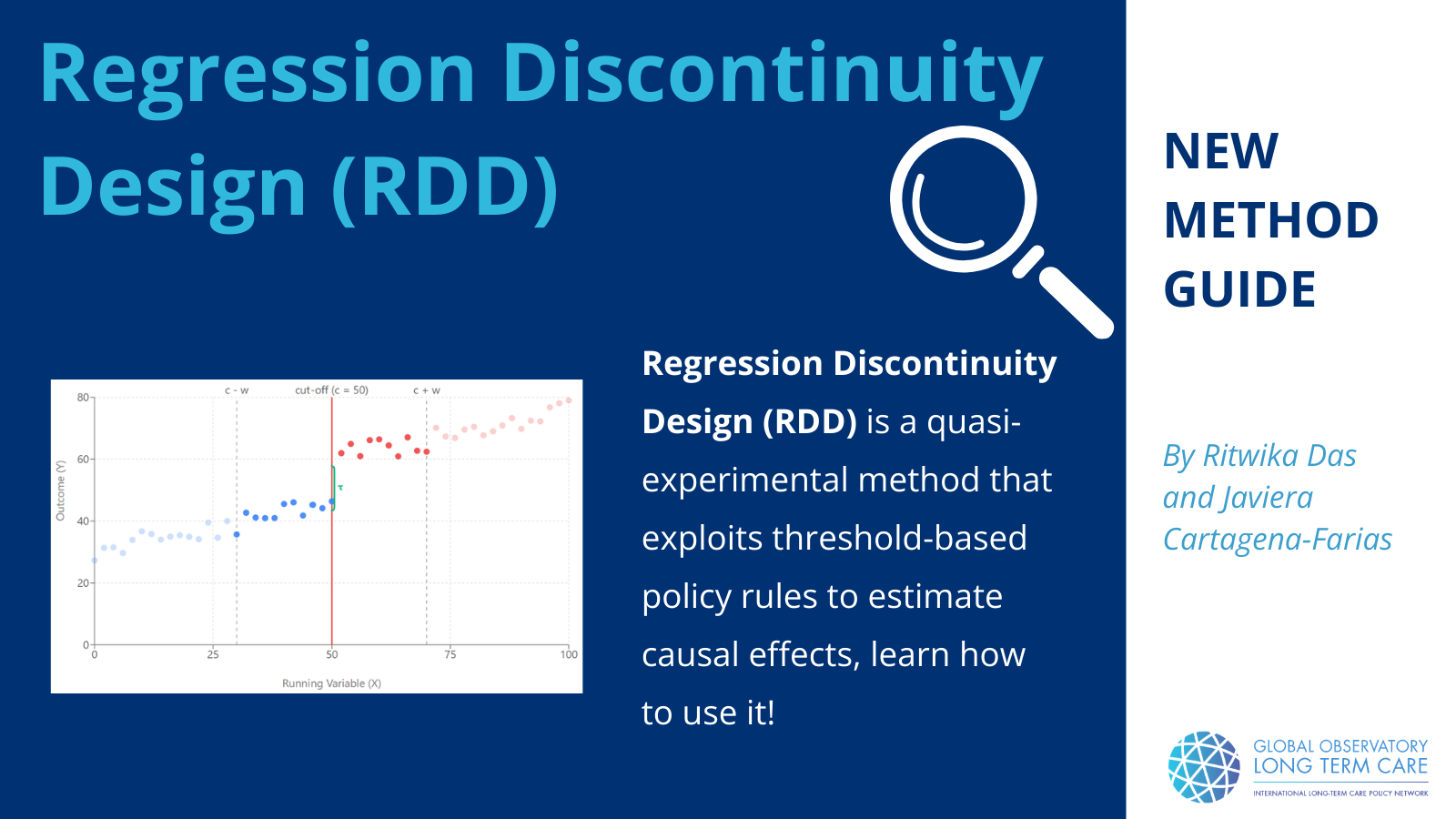
We are delighted to share with you a new GOLTC Methods Guide on Regression Discontinuity Design
The GOLTC Methods Guides are short introductions to useful methods for Long-Term Care research written by researchers who use these methods and want to share their experience and knowledge.
The Regression Discontinuity Design methods guide has been written by Ritwika Das and Javiera Cartagena-Farias (London School of Economics and Political Science).
Regression Discontinuity Design (RDD) is a quasi-experimental method that exploits threshold-based policy rules to estimate causal effects. The basic idea is simple: when access to a programme or intervention is determined by a threshold, people just above and just below that cut-off are likely to be very similar, making it possible to compare them in a way that approximates a randomised experiment.
You can read the more about this method and how to use it here.
You can find all the GOLTC Methods Guides here.