

by Javier García García (Department of Sociology and Social Work, University of Valladolid, Spain)
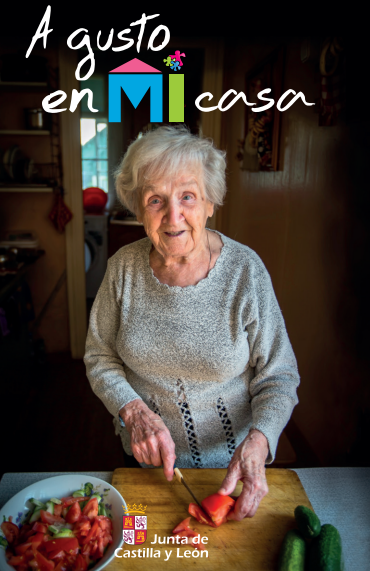
Ageing at home, particularly for older people in rural areas, means maintaining routines, social ties, independence and a sense of belonging. But this can only be sustained if there is sufficient support that is well-coordinated and tailored to each individual’s circumstances.
The pilot project ‘A Gusto en Mi Casa’, carried out in a rural area of the province of Ávila (Castile and León, Spain), offers promising evidence that older people’s quality of life can improve when home care combines personal assistance, home adaptations, assistive devices, telecare, and coordination between health and social care services.
Living longer, but with what support?
Ensuring that people can remain in their familiar surroundings requires more than just the goodwill of family members. This is a particularly acute challenge in rural Spain. The geographical dispersion of the population, the loss of informal support networks and the physical barriers in many homes make it difficult for people to remain in their own homes as they age. Care often falls on female family members, who are often older themselves, perpetuating gender inequalities and invisible burdens. In this context, innovation in care provision is essential to identify which combinations of support are most effective in enabling people to continue living safely and independently in their own homes and communities.
The “A Gusto en Mi Casa” programme
The “A Gusto en Mi Casa” programme responds to this challenge. The aim was to provide social and healthcare support that would enable people to continue living in their own homes with greater safety, independence and well-being.
The programme was not based on a single service. It combined different forms of support according to each person’s needs. This approach is important because quality of life does not depend on a single factor. It is not enough to address a health need if the person cannot shower safely, leave the house, maintain relationships or make decisions about their daily life.
One of the key elements was the role of social workers as key contacts, coordinating resources, assessing situations, supporting life plans and liaising between social services, health services, local authorities and the third sector. This coordination meant that individuals and their families did not have to navigate a fragmented system on their own.
Alongside this, another innovative feature was the introduction of the personal assistant as a professional role. Although traditionally associated with the disability sector, this form of support was brought into long-term care for older people as a pioneering part of the project. The experience was very positively received by both older people and their families, who particularly valued the level of support provided, the respectful and caring relationships established, and the recognition of each person’s autonomy and right to make decisions about their own life.
How the impact of “A Gusto en Mi Casa” was evaluated
A study carried out by a team of researchers from the University of Valladolid combined quantitative and qualitative methods to assess the pilot’s impact, conducting a before and after study. The researchers used a validated tool for quality of life (GENCAT Scale) as well as satisfaction questionnaires, completed by service users and their families. For the qualitative part, 13 professionals involved in the intervention took part in semi-structured interviews. These interviews explored how the project worked in practice, the changes observed in the lives of older people and their families, and areas that could be improved. During its pilot phase, the project supported 132 people and complete GENCAT assessments from both the beginning and the end of the intervention were available for 43 participants.
What changed after taking part in the programme?
Both the quantitative and qualitative findings were highly positive. The qualitative evidence highlighted the reassurance of feeling supported, the opportunity to leave the house, the relief experienced by family carers, and the ability to avoid residential care as the default option. The findings suggest that enabling people to remain at home depended not simply on providing more services, but on ensuring that those services worked together as a coherent and flexible support network. Care management connected personal assistance, home adaptations, technical support, and health and social care, enabling support to be tailored to individual circumstances and adjusted as needs changed.
As one care manager explained:
“Many people have expressed their appreciation for the support provided through the care manager, personal assistance and everything else included in the project. They have benefited from such a valuable opportunity and from support that has helped them improve their quality of life. One person who was receiving no support from their family or anyone else, and had effectively been abandoned, has gone on to receive a great deal of support and to feel valued and understood. They are now genuinely able to pursue their own life plan, in one way or another.”
The quantitative data showed high satisfaction with the project, with three in four people stating that the programme had met their expectations to a fair or large extent. There were also improvements in virtually all dimensions of quality of life. The most significant improvements were recorded in material well-being and rights. The overall quality of life index also improved.
Why these results matter
The study provides evidence in favour of a shift in approach to long-term home care in rural areas. If public policies are to respect the autonomy of older people, they must invest in models that enable them to live at home with personalized support. This is not about idealising home life or denying that some situations require residential care. It is about expanding the range of realistic options.
Policy implications
“A Gusto en Mi Casa” offers a clear lesson: home care in rural settings works best when it is not designed as a collection of isolated services, but as an ecosystem of personalised support. Combining personal assistance, home adaptations, assistive technologies, coordination between social and health services, and professional guidance from social workers may help delay or prevent admission to residential care while enhancing well-being, strengthening independence quality of life.
The evidence from this programme suggests that ageing at home in rural Spain cannot be sustained by attachment to one’s home alone. It depends on the public sector’s capacity to build a sufficiently resourced, equitable and compassionate network of support around each person and their home.
“Ageing at home whilst maintaining a good quality of life does not depend solely on the will of the individual or the family. It depends on public policies capable of bringing care to the places where daily life takes place”
To find out more:
Elices, Á., García, J., Prieto-Lobato, J. M., & Rodríguez, C. (2024a). Scope, potential and limitations of personal assistance in long-term and end-of-life home care: a case study. EHQUIDAD. Revista Internacional de Políticas de Bienestar y Trabajo Social, 175–214. https://doi.org/10.15257/ehquidad.2025.0007
Elices, Á., García, J., Prieto-Lobato, J. M., & Rodríguez, C. (2024b). Social Work in rural communities. Professional intervention in home-based care for older adults. Gazeta de Antropología, 40(2), Artículo 02. https://hdl.handle.net/10481/94487
García, J., Elices, Á., Prieto-Lobato, J. M., & de la Rosa, P. (2025). Impact of home care on quality of life. Analysis of the pilot experiencia “A Gusto en Mi Casa”. Revista OBETS, 20(2), 195-218. https://doi.org/10.14198/obets.27939